
 Srpski
 Български
 Polski
 Hrvatski
 Čeština
 简体中文
 Deutsch
 Español
 Français
 Italiano
 Português
 Nederlands
 Svenska
 Slovenčina
 Türkçe
 Українська
Endotoxins: what they are and how they are measured
A peptide can be chemically pure and sterile and still carry endotoxins. That is why endotoxins are considered separately from purity and microbiology, and why they are one of the results worth reading on a certificate.
What endotoxins are
Endotoxins are lipopolysaccharides (LPS), molecules from the outer membrane of Gram-negative bacteria such as Escherichia coli. They are released when bacteria grow, divide or die. The last point is the important one: when bacteria are killed, their endotoxins remain.
In the body, endotoxins are potent pyrogens: even in very small amounts they cause fever and an inflammatory reaction. That is why pharmacopoeias set endotoxin limits for products where this matters.
Why they are hard to remove
- They withstand heat. Standard steam sterilisation at 121 °C does not destroy them. Laboratory glassware is freed of endotoxins with dry heat, at around 250 °C for at least half an hour.
- They pass through a sterile filter. A 0.22 µm filter retains bacteria, but not a considerable share of endotoxins, which are much smaller than bacteria.
- Sterile does not mean endotoxin-free. A product that contains not a single living bacterium can still contain endotoxins from bacteria that were once in it.
Endotoxins most often get into a peptide through water, equipment or raw materials, as well as through any microbiological contamination during production. Once they are in a peptide solution, they are hard to remove and require special procedures. That is why prevention is always better than cleaning up afterwards.
How they are measured: horseshoe crab blood
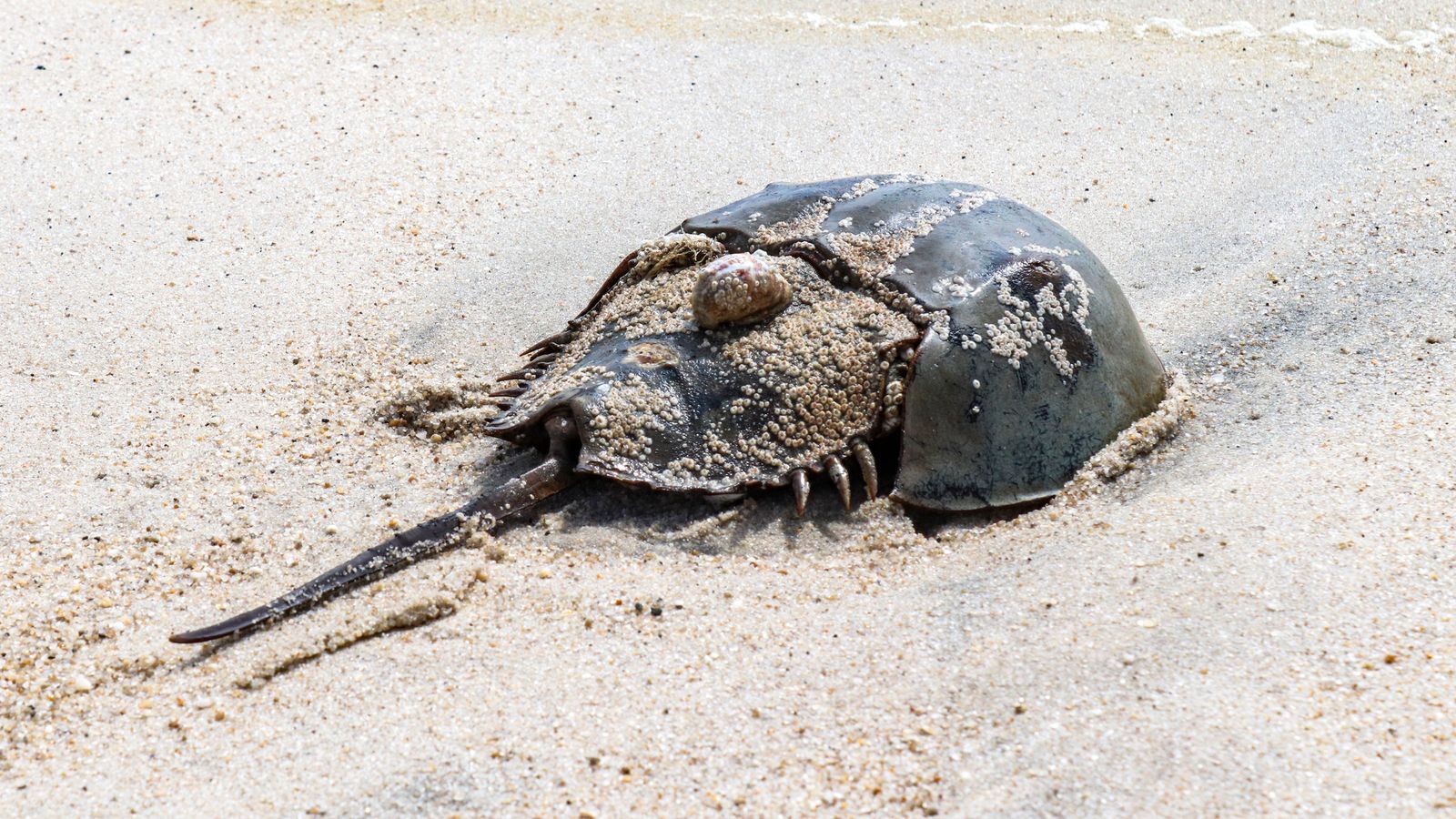
The best-known test comes from the Atlantic horseshoe crab (Limulus polyphemus), an ancient marine arthropod from the coasts of North America. Its blood contains cells, amebocytes, that clot in the presence of endotoxins. This is the horseshoe crab's way of defending itself against bacteria. In the 1960s, scientists turned it into a test, named LAL after Limulus amebocyte lysate.
The LAL test is performed in three ways:
- Gel-clot: the test tube is checked to see whether a gel has formed. The result is yes or no, at a set sensitivity.
- Turbidimetric: the test measures how the sample becomes cloudy over time.
- Chromogenic: the reaction releases a coloured substance whose intensity is measured.
Today there is also a test with recombinant factor C (rFC), which carries out the same reaction step without horseshoe crab blood. The European Pharmacopoeia recognises it as a separate method, in chapter 2.6.32.
How to read the result
Endotoxins are expressed in endotoxin units (EU), usually per milligram of product (EU/mg). The result should be accompanied by the limit the product must meet and the method used to measure it.
One thing is easily overlooked: the peptide itself can interfere with the reaction, speeding it up or slowing it down. That is why, in a properly performed test, a known amount of endotoxin is added to the sample and the test is checked to see whether it "finds" it. An acceptable recovery is between 50 and 200%. A "below the limit" result without this check is less reliable than it looks.
What a positive result means
Elevated endotoxins do not mean that the peptide is wrong or impure in the chemical sense. The HPLC and mass spectrometry results can be flawless. They mean that there were bacteria somewhere in the process. Such a batch is reprocessed with special endotoxin-removal procedures and tested again, or it is rejected.
We describe how living bacteria and moulds are monitored in our article on microbiological purity, and how to check the result on paper in our article on the certificate of analysis.
View catalog