Srpski
 Български
 Polski
 Hrvatski
 Čeština
 简体中文
 Deutsch
 Español
 Français
 Italiano
 Português
 Nederlands
 Svenska
 Slovenčina
 Türkçe
 Українська

145.00 €
In stock
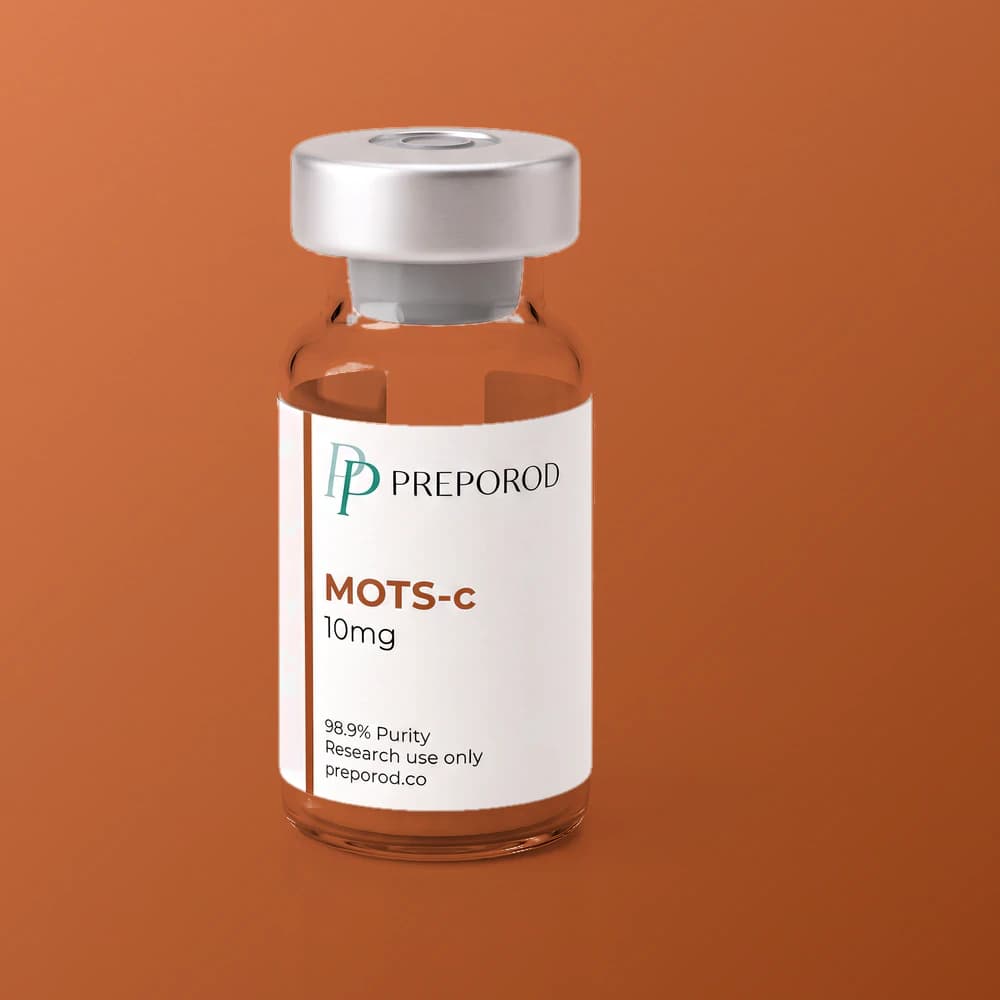
MOTS-c is a small peptide that the body naturally produces in the mitochondria, the parts of the cell that generate energy. It is studied as a signal by which the cell regulates its use of sugar and fat, particularly in muscle.
Leave your email — we will let you know as soon as the product is in stock.
The independent laboratory's report for the current batch is available on request.
MOTS-c is a mitochondrially encoded peptide of 16 amino acids, discovered in 2015. Research covers metabolic homeostasis and AMPK signaling. The peptide is formed naturally in mitochondria, the organelles that produce the cell's energy, and is studied as a signal by which the cell regulates its use of sugar and fat, particularly in muscle. When MOTS-c levels decline, studies link this to a slower metabolism and cellular aging. Packaging: one vial containing 10 mg of lyophilized peptide. 3 ml of bacteriostatic water comes with the vial. 1. Energy metabolism In studies in animal models, MOTS-c promotes activation of the AMPK pathway, through which the cell adjusts its energy expenditure, and is associated with better glucose utilization. [1] 2. Aging and mitochondrial function In research on aging, the addition of MOTS-c has been associated with improved bioenergetic parameters and an extended healthspan in mouse models. [2] Reviews of mitochondrial peptides highlight MOTS-c as one of the few peptides encoded in mitochondrial DNA. [3] 3. Protection against oxidative stress In recent studies, MOTS-c has been linked to the antioxidant response and to the protection of tissues from oxidative damage, including in models of diabetes. [4] References: 1. Tero-Vescan A, et al. The Lactate-Mitokine Axis in Exercise Adaptation: Linking Glycolytic and Mitochondrial Stress Signaling. Int J Mol Sci, 2026. 2. Tsui KH, et al. The mitochondrial-derived peptide MOTS-c improves bioenergetics in aging-associated granulosa cells and oocytes. Reprod Fertil, 2026. 3. Wang Z, et al. Mitochondrial-derived peptides: emerging therapeutic targets at the intersection of mitochondrial dysfunction and pain. Front Pain Res, 2026. 4. Li S, et al. MOTS-c attenuates diabetic nephropathy by downregulating LARS1 to promote lipophagy and suppress tubular senescence. Biochem Pharmacol, 2026.
You pay by cash on delivery: in cash to the courier when you receive the package.
A Certificate of Analysis is a document from an independent laboratory that confirms the identity, purity and mass of the substance in a specific batch. Preporod sends every batch for independent analysis.