Srpski
 Български
 Polski
 Hrvatski
 Čeština
 简体中文
 Deutsch
 Español
 Français
 Italiano
 Português
 Nederlands
 Svenska
 Slovenčina
 Türkçe
 Українська
51.00 €
Coming soon
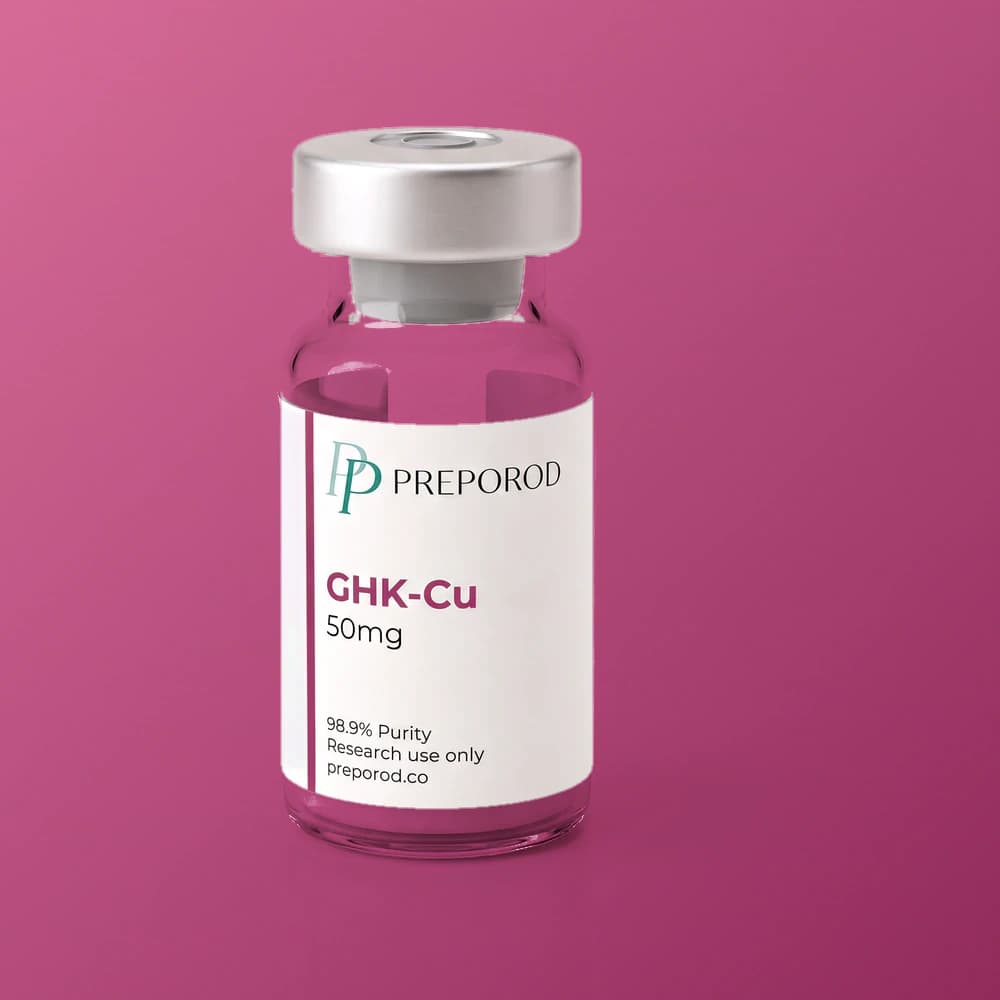
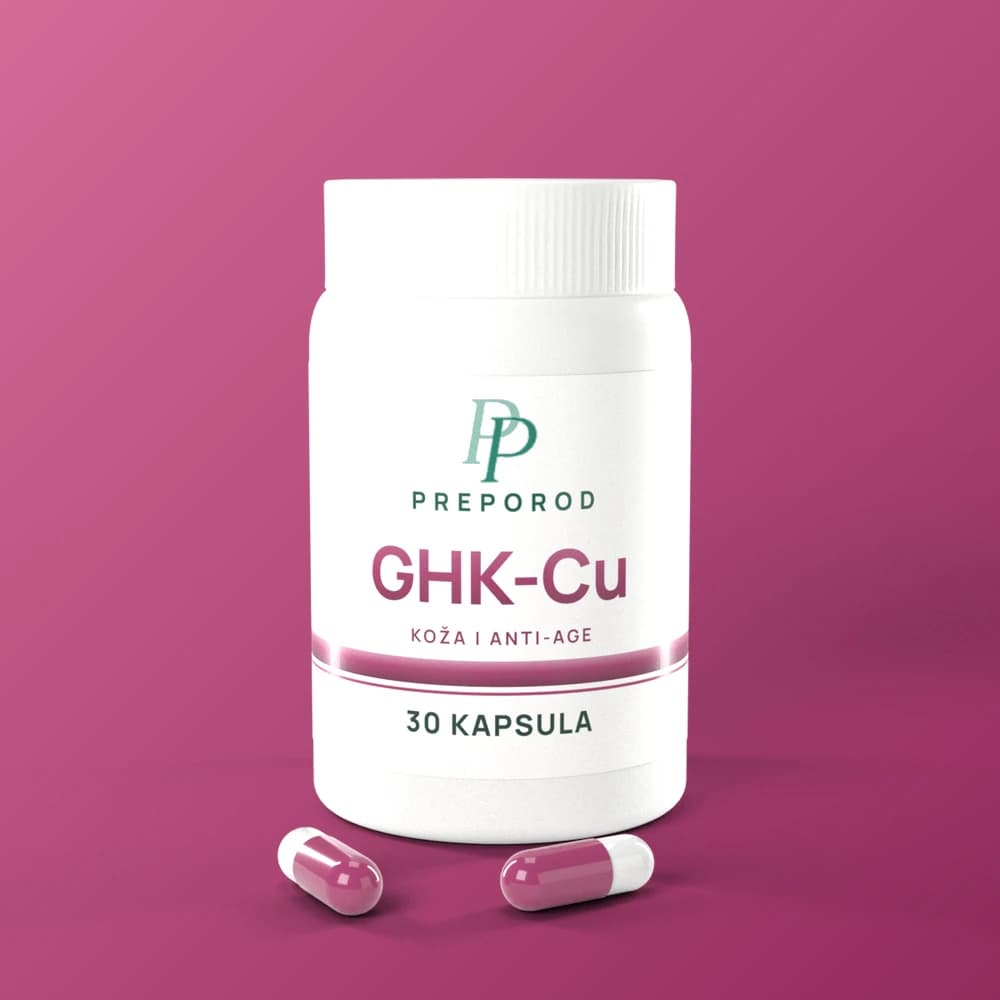
GHK-Cu is a small three-amino-acid peptide bound to copper, found naturally in human blood and saliva. It is studied in connection with skin renewal, collagen formation and wound healing.
Leave your email — we will let you know as soon as the product is in stock.
The independent laboratory's report for the current batch is available on request.
GHK-Cu is a natural tripeptide bound to a copper(II) ion, present in human plasma. Research covers the synthesis of collagen and elastin, and skin regeneration processes. The peptide is found naturally in plasma and saliva in a complex with copper, and is studied as a signal that prompts skin cells to renew themselves; its levels decline with age, which is associated with slower healing. Packaging: one vial containing 50 mg of lyophilized peptide. 3 ml of bacteriostatic water comes with the vial. 1. Skin renewal and collagen In research, GHK-Cu prompts fibroblasts to produce collagen and elastin and accelerates the renewal of damaged skin; systematic reviews confirm that mechanism in topical use as well. [1] [2] 2. Wound healing Reviews in regenerative medicine include GHK-Cu among the peptides with evidence from clinical use in tissue renewal and the management of chronic pain. [3] 3. Skin applications In recent reviews from aesthetic dermatology, GHK-Cu is classified as the peptide with the most clinical evidence in that class, with described mechanisms at the level of the fibroblasts. [4] References: 1. Mateescu DM, et al. GHK-Cu as a bioactive metallopeptide and drug-delivery cargo: coordination chemistry, formulation science, therapeutic evidence, and a translational roadmap. Pharmaceutics, 2026. 2. Najafi N, et al. A systematic review of the mechanisms and therapeutic applications of GHK-Cu in topical microneedle delivery. Arch Intern Med Res, 2026. 3. Luansritisakul C, et al. Peptides in regenerative medicine: a comprehensive review of clinical applications in tissue repair and chronic pain management. Curr Pain Headache Rep, 2026. 4. Yi KH, et al. Peptides in aesthetic dermatology: classification, fibroblast-centered mechanisms, delivery technologies, and clinical evidence. Life, 2026.
You pay by cash on delivery: in cash to the courier when you receive the package.
A Certificate of Analysis is a document from an independent laboratory that confirms the identity, purity and mass of the substance in a specific batch. Preporod sends every batch for independent analysis.